
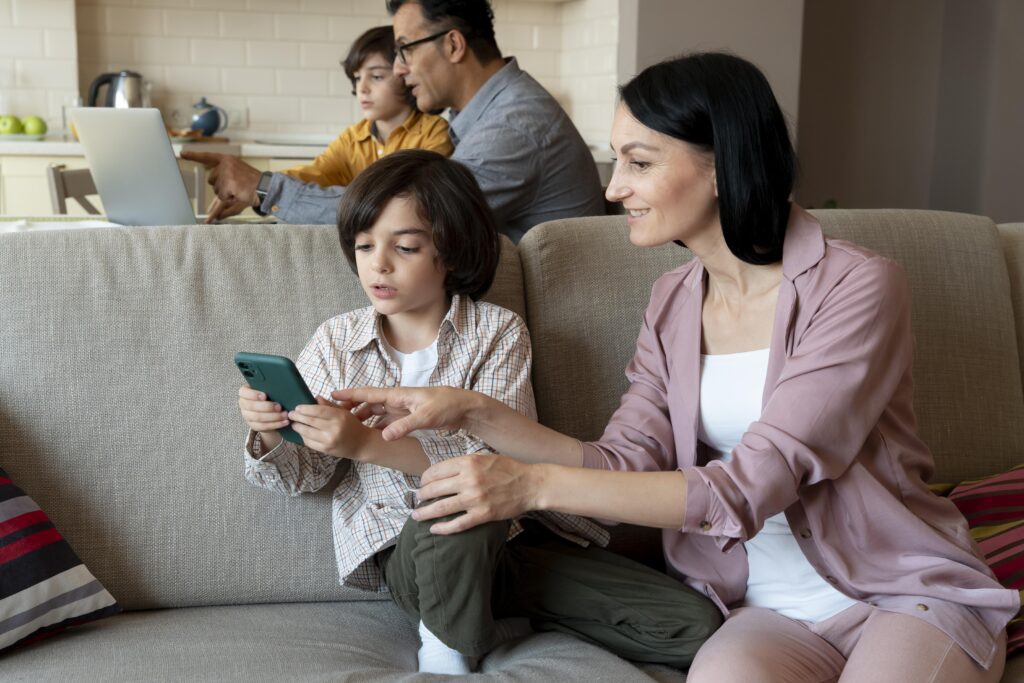
“Mum, I’m bored!” — And That’s When I Knew I Had to Do Something Different About Screen Time
It all started one ordinary Saturday afternoon.
My 7-year-old daughter walked up to me, her arms folded, and sighed the kind of sigh only a kid who has nothing to do can manage.
“Mum, I’m bored. There’s nothing to do.”
Mind you, she had a room full of toys, books, puzzles, coloring books, and a sunny backyard calling her name. Still… “nothing to do.”
That’s when I realized the screen was slowly becoming her go-to boredom solution. And I had let it happen. The easy escape. The glowing rectangle of cartoons and games had started replacing creativity and curiosity.
I knew I had to change our routine before it became a habit that was too hard to break.
Instead of taking everything away at once (which would have led to total rebellion), I started with a 3-day “Screen-Free” Challenge.
No TV.
No tablet.
No cartoons.
Just us, the house, and a little imagination.

At first, there were groans. The “what will I do now?” questions came flooding in. But something amazing happened on day two.
She picked up a puzzle we hadn’t opened in months, then a storybook, and then started drawing her comic strip using crayons and stickers.
And I realized — she wasn’t bored.
She just needed the space to rediscover how fun life is without screens.
- Creating a Balanced Routine (That ““Worked!)
After the challenge, I didn’t go back to old habits. I created a new daily routine that made screen time just one part of her day, not the center of it.
Here’s what worked for us:
We started with `is ““a simple rule:
Screen time only between 5:00 PM and 6:00 PM.
It became our “TV Hour.” She could choose what to watch (from a parent-approved list), and that freedom gave her something to look forward to.
I used a kitchen timer. When it beeped, screen time was over. No arguments, because she already knew the rule.
Stick to the same time each day. Kids thrive on routine.
- Earning Screen Time Through Activity
We introduced a reward system.
Every activity completed without whining or shortcuts gave her 10 extra minutes of screen time on the weekend.
Here’s the kind of things that earned her time:
- 30 minutes of outdoor play
- Helping with laundry
- Reading a storybook
- Crafting something creative

By Friday, she had earned up to 1.5 hours of extra screen time for Saturday cartoons or a family movie.
This taught her that screen time was not a right, but a reward, and she had control over earning it.
- “Boredom Box” — The Best Thing I Ever Made
I found an old shoebox, decorated it with her help, and filled it with slips of paper. Each paper had a fun, screen-free activity written on it.
Some ideas included:
- Make a sock puppet and put on a show
- Build a blanket fort
- Make a new sandwich recipe with mum
- Draw your dream house
- Pretend you’re a jungle explorer in the backyard
Whenever she said, “I’m bored,” I handed her the box.
And guess what? She stopped saying she was bored after a week.
- No Screens at Meal Time or in Bedrooms
We made two strict rules:
No screens at the table
No screens in the bedroom
Meal time became family talk time — we’d ask each other fun questions like “What animal would you be today?” or “What was your favorite thing you did today?”
And keeping screens out of bedrooms meant she slept better, read more at bedtime, and wasn’t tempted to sneak a video when I wasn’t looking.
- Travel Time = Talk Time or Story Time
In the car, we played audio stories, sang songs, or did fun games like “I Spy” or “20 Questions.” No tablets allowed.
She especially loved audio stories. Her favorite was a collection of silly fairy tales. Now, at age 10, she still remembers the story of “The Princess Who Snored So Loud She Shook the Castle.”
Those long road trips became some of our best bonding times.
As She Grew, So Did the Rules
Now she’s older — almost 12 — and yes, she has a personal device. But we introduced it gradually.
When she turned 10, we started allowing supervised screen time for school projects or safe browsing on weekends. Social media? Not yet. We’re taking that slow.
She knows the rules:
- 1.5 hours of screen time per day max (including YouTube and Netflix)
- Device gets turned in at 8:00 PM
- Any new app has to be approved
We have a tech-free day every Sunday, which we use for baking, hiking, or visiting the library.
And guess what? She’s okay with it. She knows when it’s time to unplug. She even reminds me sometimes, “Mum, I think we need a screen break!”
It’s About More Than Just Rules
Looking back, I’ve realized managing screen time isn’t just about saying “no” to devices.
It’s about saying yes to other things.
Yes to connection
Yes to play
Yes to boredom that sparks creativity
Yes to shared time, laughter, and memories
Screens aren’t evil. But they need boundaries. And those boundaries need to be consistent.
What I Tell Other Parents
If you’re struggling with your child’s screen habits, here’s my advice:
- Start small – even 30 minutes less per day is a win.
- Replace, don’t just remove – give fun alternatives.
- Model the behavior – if you’re always on your phone, they’ll copy.
- Be consistent – it’s hard at first, but worth it.
- Talk about it – explain why limits matter in simple terms.
You’re not being a “mean parent” by setting limits.
You’re helping your child develop a healthy relationship with technology.
And that will stay with them for life.
Final Thought: Effort Pays Off
Managing screen time takes effort, yes. It’s easier to hand them a tablet while you finish your tasks. I’ve been there.
But the effort is so worth it.
When your child writes a poem instead of watching cartoons…
When they come to you with a handmade card instead of asking for the remote…
When your family time becomes about conversation, not competition for the charger…
That’s when you know: you’re doing something right.
So, don’t worry if it’s not perfect. Just begin.
Because small, consistent changes can lead to big, lasting results.
Have you tried limiting screen time at home? What’s worked for you — and what hasn’t? Let’s chat in the comments!
FAQs
Q1: What’s a healthy amount of screen time for kids by age?
- For kids under 2, avoid screen time (except video chatting).
- Ages 2–5: Up to 1 hour a day of quality content.
- Ages 6+: Set consistent limits and balance with play, sleep, and learning.
Q2: How do I reduce screen time without causing tantrums?
- Reduce screen time slowly and replace it with fun activities like crafts, games, or outdoor play.
- Let your child help choose what to do instead.
Q3: Is screen time always bad for kids?
- No, not all screen time is bad.
- Educational shows and learning apps can help when used in balance with offline time.
Q4: What can I do if both parents are busy working?
- Set a clear screen schedule and offer screen-free fun like coloring books, puzzles, or safe play zones.
- Use audio stories or music as a quiet activity.
Q5: How do I make screen-free activities more interesting?
- Let kids explore with art, building blocks, pretend play, or nature walks.
- Join them when you can—it makes the activity more fun.
Q6: Should I use screens as a reward or a punishment?
- It’s better to use other rewards like stickers, story time, or extra play.
- Using screens as rewards can make kids want them even more.
Q7: How do I handle kids sneaking screen time?
- Keep devices in shared spaces and set screen rules together.
- Talk calmly and remind them of the limits with kindness and consistency.
Q8: Are educational apps good or bad?
- Good educational apps can support learning, but they shouldn’t replace real-world play and reading.
- Always check the app content and limit screen time.