
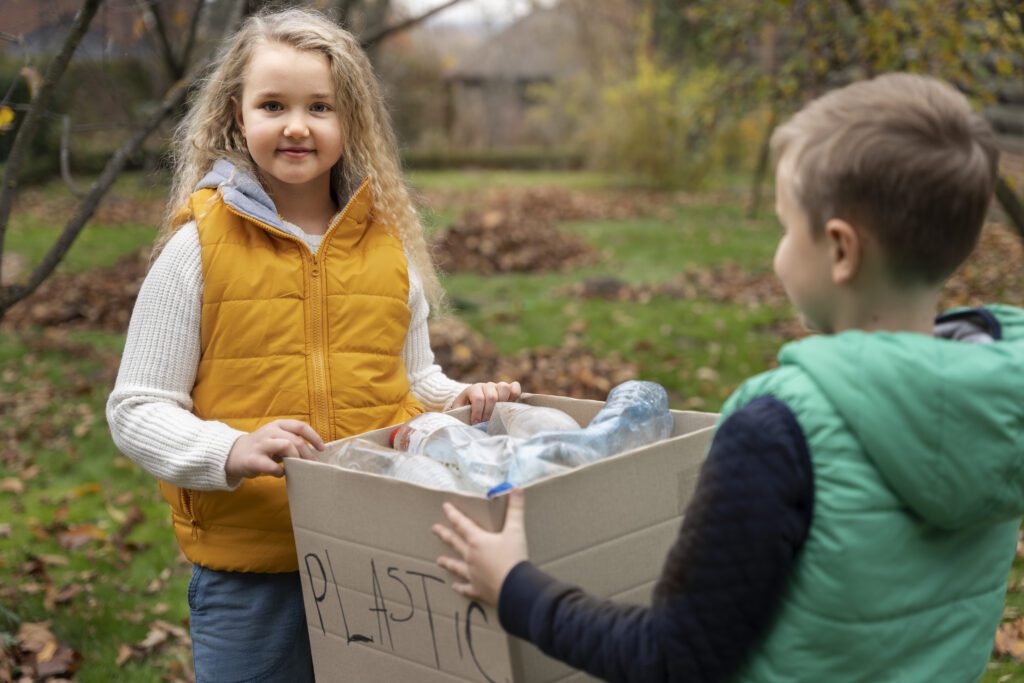
“If they can remember their favorite cartoons, they can remember how to sort plastic and paper!”
Teaching Kids About Recycling and sustainability is more than just buzzwords—they’re essential habits we must teach our children to protect the planet. Today’s kids are tomorrow’s leaders, and teaching them about sustainability is one of the best gifts we can give them. The earlier they learn how to care for the planet, the easier these habits will become a part of their daily routine and stay there.
You don’t have to be an environmental expert to teach kids about recycling and sustainability, though. With a little curiosity, a splash of creativity, and steady practice, any parent can help a child build green habits.
1. Make it Visual: Use Charts, Posters & Colorful Bins
Toddlers and early readers absorb pictures, so let the images do the explaining. Hang a recycling chart for non-readers, using color-coded baskets: blue for recycling, green for compost, and black for trash. Hand out reward stickers when they sort items correctly. Even a simple chart taped to the wall can remind them what goes where after a meal or craft time.
2. Story Time: Read Eco-Themed Books Together
Stories make big ideas feel small enough for kids to grab. Snuggle up and try these favorites:
Michael Recycle by Ellie Bethel
The Earth Book by Todd Parr
Compost Stew by Mary McKenna Siddals
Above tales also help to teach kids about recycling and sustainability. Kids hear these tales, recycling turns from a rule into an adventure.
3. Fun Sorting To Teach Kids About Recycling And Sustainability at Home
Cleaning up can easily become a game.
– *Recycling Relay*: Race to toss items in the right bin.
– *Trash or Treasure*: You show a thing, they guess where it goes.
– *Rescue the Recyclable*: Safely fish lost recyclables from the trash can.
Moving and laughing help lessons stick far longer than lecturing ever will.
4. Go Green with DIY Upcycling Crafts
Before heading to the store, ask, ‘What can I make with this?’
– Turn an old tube into binoculars.
– Stick bottle caps on paper for a mosaic.
– Use a shoebox as a tiny scene or diorama.
These projects spark imagination, save money, and show that trash can become treasure.
5. Lead by Example: Simple Everyday Actions Kids Can Copy
Talking about the planet is nice, but kids watch what you do.
– Grab a reusable water bottle before heading out.
– Toss cloth shopping bags into the car so you never forget.
– Scrape food scraps into the compost bin instead of the trash.
– Flick off lights in rooms you’re leaving and teach that habit.
Say it out loud while you do it: “I’m using this bottle so we don’t waste plastic.”
6. Enjoy Learning Videos Together
Screen time can teach, too! Check out:
– The Peppa Pig recycling episode.
– SciShow Kids clips on YouTube.
– Sesame Street’s catchy “Recycle” song.
These short shows break big ideas down and make them fun.
7. Build a Home Recycling Hub
Make a tidy corner where sorting happens daily to teach kids about recycling and sustainability.
– Separate cans, paper, and plastic.
– Add a sealed container for compost.
– Stack jars for reusing or crafting.
The easier it is, the more everyone joins in!
8. Name a Recycling Monitor Each Week
Let kids wear an official hat, even if it’s pretend:
– “Recycling Leader of the Week.”
– “Eco Inspector.”
– “Compost Captain.”
They’ll take pride in the title and remind everyone else.
9. Tour a Recycling Center or Green Fair
Watching trucks dump cans and bottles at a plant is a cool field trip.
– Ask your city if they offer recycling plant tours.
– Explore nearby parks that run green programs.
– Mark your calendar for the local Earth Day bash.
Watching grown-ups show real care for the planet speaks volumes to children.
10. Composting for Beginners (Kid Edition)
Grab a lidded bucket and start a kitchen compost step-by-step:
– Show what belongs inside: banana peels, veggie scraps, eggshells.
– Let kids toss leftovers in after every meal.
– Peek inside weekly and notice the mix becoming dark, crumbly soil.
Keep it hands-on, colorful, and a bit like magic.
11. Introduce the “4 R’s” with a Twist
The adult way is:
1. Reduce
2. Reuse
3. Recycle
4. Recover
Spin it for kids:
1. Rethink: Do we need this?
2. Refuse. Say no to plastic straws.
3. Reimagin:e What else can this become?
4. Respect Care for the Earth and each other.
This word swap stretches their minds far past the recycling bin.
12. Make Nature Part of Their Routine
Regular time outdoors helps children bond with the green world. It is one of the most effective ways to teach kids about recycling and sustainability.
– Take slow walks, collecting leaves or cool rocks.
– Set up scavenger hunts to spot bugs, feathers, or flowers.
– Chat about how one tall tree scrubs a car-load of air.
Real fun in nature, day after day, grows instinctive care for it.
13. Start a Mini Garden or Plant Challenge
Let your kids grow something, even if it’s brewed in a cup:
* Fast-growing beans or herbs are great for beginners.
* Track growth with pictures or even a calendar.
* Talk about food waste and where food comes from.
Watching plants develop builds patience and respect for food.
14. Celebrate Earth-Friendly Wins
Positive cheers work wonders:
* You remembered to turn off the water-high five!
* Look at how much trash we avoided today!
* Make silly certificates like “Recycling Rockstar.”
* Celebrate effort, not just picture-perfect habits.
15. Inspire with Real Stories of Young Eco Heroes
Example: Ryan Hickman began recycling at age 3. Today, he runs Ryan’s Recycling Company.
Check out his site: ryansrecycling.com.
It features videos, facts, and fun eco tips for kids.
Tales like his show that even little kids can swing big change.
FAQs: Teaching Kids About Sustainability
1: At what age can I start to teach kids about recycling and sustainability?
A: As early as 2 or 3. Start with simple sorting games and bright visuals.
2. How to teach your toddler about recycling and sustainability for free
Use everyday items to show your toddler how to sort paper, plastic, and cans into separate bins. Read eco-friendly storybooks and do DIY crafts from recycled materials to make learning fun and free.
3. Recycling activities for students
Engage students with hands-on recycling games, classroom bin sorting challenges, and eco-crafts using discarded materials. These activities build awareness and promote teamwork.
4. How to teach preschoolers about recycling and sustainability?
Teach preschoolers recycling through storytelling, sing-along songs, and sorting games using color-coded bins. Keep the concepts simple, fun, and age-appropriate.
5. Recycling Videos for students
Use educational recycling videos on YouTube or platforms like PBS Kids and National Geographic Kids. Visual content helps students understand the impact of recycling on the planet.
6. Recycling Activities for Kids Worksheets
Download free recycling worksheets to teach kids about recycling and sustainability with sorting tasks, coloring pages, and eco-puzzles. These help reinforce recycling concepts through interactive, printable fun.
7. How to explain recycling to a child
Tell your child recycling means turning old things into new things to protect the Earth. Use simple language and show examples from your home recycling routine.
8. Recycling activities for high school students
Challenge teens with upcycling projects, research assignments on waste management, and eco-awareness campaigns. These activities promote leadership and responsibility.
9. Free recycling activities for preschoolers
Offer free recycling fun with printable coloring sheets, bottle cap crafts, and pretend-play recycling centers at home. These encourage hands-on, eco-friendly habits early on.
10. What are the applications of AI in sustainability and recycling?
AI is changing how we think about recycling and keeping our planet clean. Improving waste-sorting accuracy it makes sure that bottles, cans, and paper end up in the right bins. Smart sensors and robot arms now scan trash piles, pick out recyclables, and do the job much faster than people can. That means less good material is tossed away by mistake. As factories use AI to fine-tune their processes and cut energy waste, they shrink their carbon footprints bit by bit. These tiny wins add up to a cleaner, greener future–one smart solution at a time.
Colette Wilson and Tom’s Story:
A Fun Way to teach kids about recycling and sustainability
Meet everyday parents Colette and Tom. Between work, online lessons, and three bikes that won’t stay upright, their schedule looks wild. Still, they squeeze in time for math, hunting missing socks, and remembering who packs the snacks for school trips.
One April morning, Colette found a postcard tucked inside Lucy’s homework folder. It was from her daughter’s teacher, reminding families that Earth Day was near and suggesting they plant a tiny garden. Colette grinned, her mind racing with possibilities. What if we grow seeds at home too? she asked the rest of the crew.
Tom quickly grabbed an empty strawberry box from the kitchen counter. Let’s turn this into a mini-greenhouse! he said. A few snips for drainage holes, a sheet of clingfilm for a roof, tiny vents along the edge, and poofed up a project that costs almost nothing.
Lucy dumped in soil, squealed when she spotted worms, and the kitchen felt like spring. Ollie rummaged through the recycling bin and held up a crayon drawing of a tree. Is this a planting tree or a recycling tree? Tom joked. Ollie just giggled and waved the paper like a flag.
Colette stumbled on a pile of stickers Lucy brought home from school. One design showed a tomato wearing a crown and a potato riding a wave. Colette chuckled and said, “When we reuse stuff, it’s like giving it a short vacation. Where do empty juice boxes want to go?”
“To a compost golf course!” Tom chimed in, pretending to swing a club. Everyone cracked up and kept sorting old notebooks, tearing out pages for crafts and setting the covers aside for recycling.
That silly little moment turned into a perfect lesson about recycling and caring for the planet. While they worked, they munched on fruit, danced to music, and stored up memories along with the cardboard and paper. Even tiny Ollie rolled his toy truck between the bins, pretending to pick up litter.
For parents and teachers:
Kids for Saving Earth has free lessons, games, and printables that make teaching kids about recycling simple and fun.