
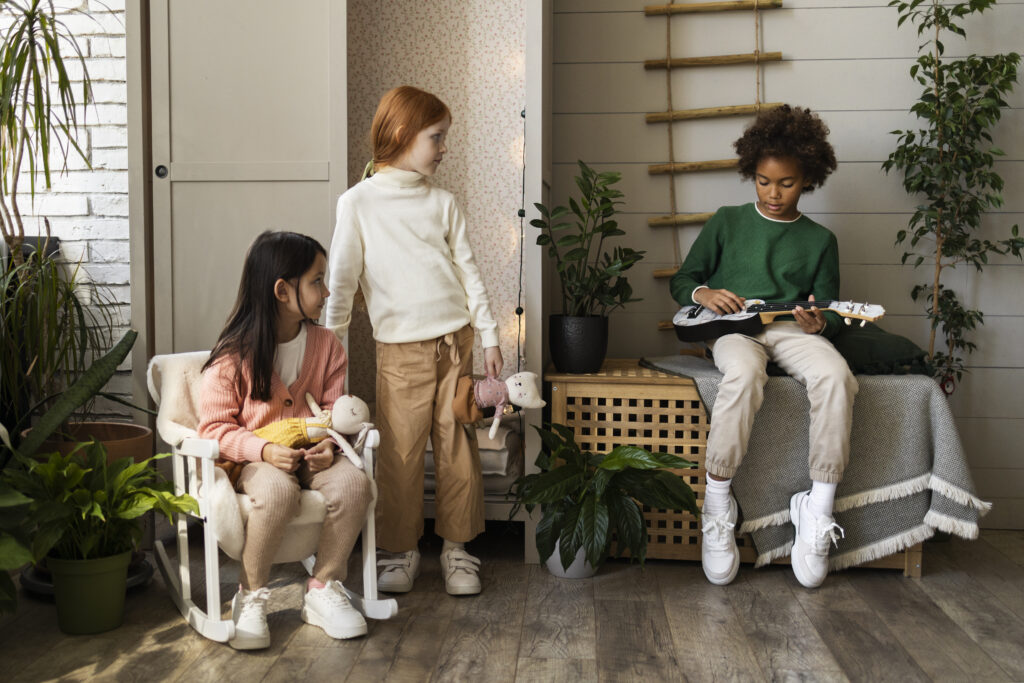
Many millennial parents are discovering the benefits of 90s-style parenting for millennial parents in today’s busy world. Parenting trends are constantly evolving, adapting to changes in technology, social pressures, and shifting family values. In 2025, a fascinating movement is underway: millennial parents are increasingly embracing a 90s-style parenting revival. But why are modern families looking back? Does this trend offer real benefits for today’s kids and caregivers?
Let’s take a deep dive into this trend, bust myths, and offer actionable tips for parents who want the best of both worlds.
What Is 90s-Style Parenting?
In the 1990s, parenting styles were generally described as more authoritative or even traditional. Parents set clear boundaries, encouraged independence, let kids navigate conflict, and did not hover (the term “helicopter parent” was barely coined!). The benefits of 90s-style parenting for millennial parents include fostering independence and resilience in children.
Key aspects of the 90s-style approach include:
-
Setting boundaries: Rules were established, with logical consequences for misbehavior.
-
Encouraging independence: Kids walked to school, handled minor conflicts, and explored freely.
-
Limited screen time: The internet was new; screen time was mostly TV and strictly managed.
-
Unstructured play: Children spent hours outdoors, inventing games and socializing without adult interference.
-
Parental authority: While parents listened, their authority wasn’t questioned as frequently as today.

Why Are Millennials Embracing 90s-Style Parenting?
Today’s millennial parents, raised in the 90s themselves, are re-thinking gentle parenting and more child-centered parenting techniques that became popular in the 2010s and 2020s. While these modern approaches focus on empathy, emotional validation, and problem-solving, many parents are experiencing parenting burnout from the intense emotional labor involved.
Key reasons for the revival:
-
Burnout from “perfect parenting”: The pressure to meet high standards in gentle parenting can lead to stress and exhaustion.
-
Desire for balance: Millennial parents yearn for a practical blend of empathy and authority, seeking to be present but not overbearing.
-
Nostalgia for simplicity: Many recall their childhoods as freer and less stressful.
-
Research-backed benefits: Studies highlight that excessive parenting stress increases the risk of parental burnout, negatively affecting family Wellbeing.
-
Community and social connection: Parents want their children to experience the freedom and strong peer relationships they enjoyed.
Why are parents returning to 1990s parenting methods?
Parents are drawn back to 1990s parenting methods mainly because they offer a simpler, balanced approach compared to the complexities of modern styles. The 90s favored authoritative parenting which combined clear rules and expectations with warmth and support. This style promotes independence and resilience in children by encouraging unstructured play and setting healthy boundaries. Many modern parents face burnout due to the emotional intensity and perfectionism often tied to gentle parenting, making the 90s approach feel more sustainable and less stressful. Additionally, nostalgia for the outdoor freedom and less screen time of their childhoods fuels this revival.
Is gentle parenting sustainable for working parents?
Gentle parenting, which emphasizes empathy, emotional validation, and low discipline, can be challenging for working parents due to its demand for constant patience and emotional availability. Research and parental reports indicate it often leads to increased parenting stress and emotional exhaustion because balancing work and the high emotional labor gentle parenting requires is difficult. Working parents may feel overwhelmed by the need to manage their feelings alongside their child’s, leading to higher burnout risk. Hybrid approaches that include some authoritative elements (clear rules and boundaries) alongside gentle communication tend to be more practical and sustainable.
Impact of economic pressures on parenting style choices?
Economic pressures strongly shape parenting styles today. Unlike the 1990s, when many households thrived on a single income, modern families often require dual incomes to meet higher housing, childcare, and education costs. This financial strain leaves parents with less time and energy, influencing them to seek parenting methods that are effective yet less time-intensive. The high cost of living and increased expectations create stress, contributing to parental burnout and making approaches like gentle parenting sometimes feel unrealistic. Many parents thus gravitate towards more pragmatic, clear-boundary methods like those of the 90s, which provide structure without excessive emotional labor.
What is parental self-efficacy, and how does it relate to parenting stress?
Parental self-efficacy refers to a parent’s belief in their ability to successfully manage parenting challenges and raise their child. Higher self-efficacy correlates with lower parenting stress and burnout since confident parents feel more competent and resilient. Parents who explore the benefits of 90s-style parenting for millennial parents often find it easier to set realistic expectations. Conversely, when parents doubt their skills or face overwhelming demands, stress and emotional exhaustion increase. Modern parenting’s intense information overload and social media comparison often erode self-efficacy. Embracing 90s-style parenting’s straightforward rules and familiar boundaries can boost parental confidence and reduce stress.

What are the common parenting stress and emotional exhaustion factors?
Parenting stress arises from factors such as:
-
High expectations from society and self
-
Constant multitasking between work and caregiving
-
Managing children’s screen time and behavior
-
Navigating conflicting advice from digital sources
-
Financial pressures and lack of support
Emotional exhaustion happens when these stressors accumulate without adequate rest or coping, leading to burnout symptoms like detachment and reduced parenting satisfaction. Simple, consistent parenting strategies rooted in the 90s approach can alleviate these pressures by reducing complexity and promoting realistic standards.
How does authoritative parenting differ from permissive parenting?
Authoritative parenting (common in the 90s) balances firm but fair discipline with emotional support. It involves clear rules, consistent consequences, and respectful communication. This style encourages responsibility and social competence.
Permissive parenting is more lenient, with few rules and high indulgence of a child’s desires. While nurturing, it often lacks boundaries, which can lead to issues with self-regulation and school performance.
Research favors authoritative parenting for producing well-adjusted children, while permissive styles may increase behavioral problems. The 90s revival highlights authoritative traits to counteract the burnout sometimes seen in very gentle or permissive approaches.
What is parental burnout, and how can it be predicted?
Parental burnout is a state of overwhelming exhaustion related to parenting duties, emotional distancing from children, and a sense of inefficacy. It can be predicted by factors like:
-
High levels of ongoing parenting stress
-
Low social support and self-efficacy
-
Unrealistic parenting expectations
-
Economic hardship
-
Multiplying roles and multitasking pressures
Reducing risks involves setting manageable rules, balancing work and home life, seeking social support, and shifting to parenting methods that feel achievable—like the 90s-style balance of authority and care—helping parents reconnect positively with their children.
Why set unstructured play boundaries?
-
The benefits of 90s-style parenting for millennial parents can improve children’s social skills through unstructured play. Unstructured play is vital for creativity and social skill development, common in the 90s childhoods. However, safe boundaries are necessary to protect kids from injury or harm. Setting reasonable limits around playtime locations, duration, and supervision ensures freedom with safety. Modern parents adapt these boundaries to accommodate new dangers (e.g., online risks) while encouraging the benefits of independent play still upheld in the 90s parenting ethos. Understanding the benefits of 90s-style parenting for millennial parents can help create a happier family environment.
What are effective positive discipline strategies?
Positive discipline includes:
-
Clear, consistent rules with logical consequences
-
Focusing on teaching rather than punishing
-
Using calm communication
-
Encouraging problem-solving skills
-
Reinforcing good behavior with praise
These strategies align well with 90s authoritative parenting, fostering respect, responsibility, and emotional regulation without harsh punishment. They provide structure and emotional support, reducing parenting stress and behavioral issues.
Gentle Parenting vs. Traditional Parenting: What’s the Difference?
Understanding the difference helps clarify why some parents are revisiting old-school methods.
| Gentle Parenting | 90s-Style/Traditional Parenting |
|---|---|
| Emphasizes empathy, negotiation | Emphasizes respect, obedience |
| Focuses on emotional connection | Focuses on boundaries, consequences |
| Avoids punishment; prefers discussion | Uses logical consequences |
| Often protects children from discomfort | Encourages resilience, independence |
| Can increase parental workload/stress | May offer more work-life balance |
Both styles have valuable lessons. The trend now aims to blend the strengths of each.
Psychological Research: Parenting Stress, Parental Burnout, and Self-Efficacy
Recent academic findings:
-
Parenting stress is one of the strongest predictors of parental burnout. High parental self-efficacy (sense of competence and adequacy) can buffer against this risk. However, the push for perfection in modern parenting can erode self-efficacy, leading to more stress and emotional exhaustion.
-
Parents with high stress levels report more symptoms such as emotional exhaustion, detachment from parenting, and reduced enjoyment with their children. Embracing the benefits of 90s-style parenting for millennial parents helps reduce parenting burnout and stress.
-
The number of children, parental gender, and family support systems can moderate these effects. For example, mothers and parents of only children may face higher risks of burnout.
Key takeaway:
-
Balancing expectations, accepting “good enough” parenting, and putting realistic rules in place are essential for parental well-being. Clear boundaries are a key part of the benefits of 90s-style parenting for millennial parents.
Practical Tips for Embracing the Best of 90s-Style Parenting
1. Set Clear, Simple Rules
Communicate expectations simply and kindly. Kids thrive with clear, consistent boundaries.
2. Encourage Independent Play
Let children entertain themselves with safe, unstructured activities—outdoors or with basic toys. This builds problem-solving and independence.
3. Practice Positive Discipline
Explain consequences calmly. Use time-outs, privilege removal, or logical consequences, rather than prolonged negotiation or lectures.
4. Unplug Together
Get everyone off devices for regular blocks of family time. Read, play, or cook together as in the pre-social media era.
5. Foster Emotional Resilience
The benefits of 90s-style parenting for millennial parents are the balance between empathy and authority. Validate your child’s feelings, but don’t shy from saying “no.” Learning to cope with limits supports mental strength.
6. Prioritize Self-Care
Acknowledge your limits. Build a support network. Remember: a rested parent is a better parent.
Trending FAQs about 90s-Style Parenting Revival
Q1: Is 90s-style parenting too strict for today’s kids?
No. Modern 90s-style parenting emphasizes blending boundaries with empathy, rather than harshness. It’s about structure and warmth.
Q2: Can I mix gentle parenting with traditional techniques?
Absolutely! Most experts suggest a balanced approach—firm boundaries with kind communication and emotional support.
Q3: How does 90s-style parenting address technology?
Limit screen time, encourage real-world play, and model healthy tech habits. Have device-free hours for everyone.
Q4: Will authoritative parenting harm my child’s self-esteem?
Not if combined with supportive guidance. Setting rules while affirming your child’s feelings builds confidence and security.
Q5: What about parental burnout? How can I avoid it?
Lower perfectionist expectations. Accept help, delegate tasks, and aim for “good enough” instead of perfection.
Q6: Is unstructured playtime beneficial?
Yes! Research shows free play boosts creativity, self-regulation, and social skills, preparing kids for real-life challenges.
Conclusion: The Case for Blended, Balanced Parenting
The 90s-style parenting revival is not about going backwards—it’s about moving forward with lessons from both past and present. Millennial parents are increasingly aware that:
-
Setting boundaries is healthy, not harsh.
-
Children benefit from both empathy and structure.
-
Parental well-being matters—burnout helps no one.
-
Old-school wisdom and gentle parenting strategies can and should co-exist.
The best parenting is not about being perfect—it’s about being present, flexible, and caring.
Embrace what works for your family. Create routines and rules that fit your unique situation, blending the independence of the 90s with the emotional intelligence of today. Your children—and your sanity—will thank you for it.